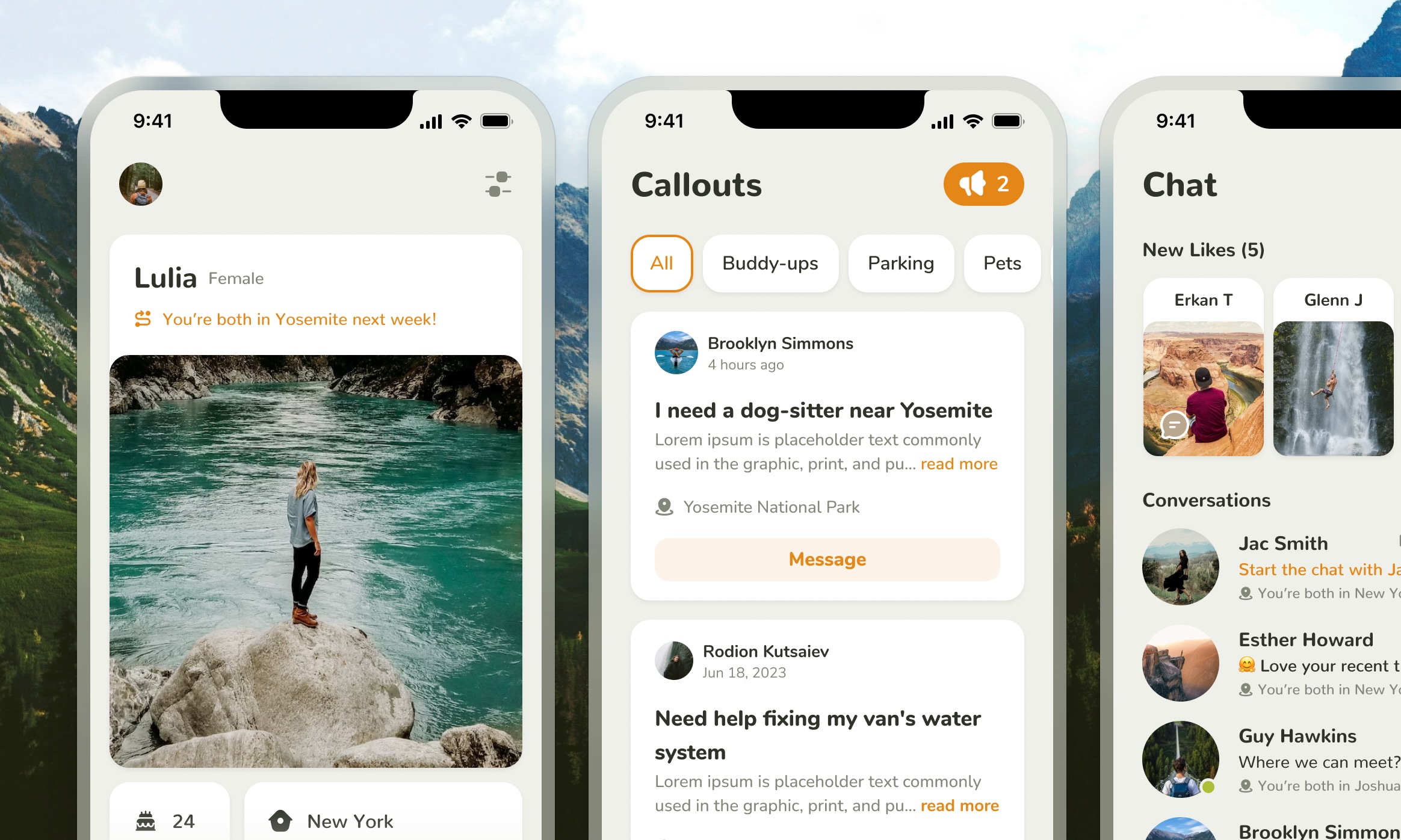
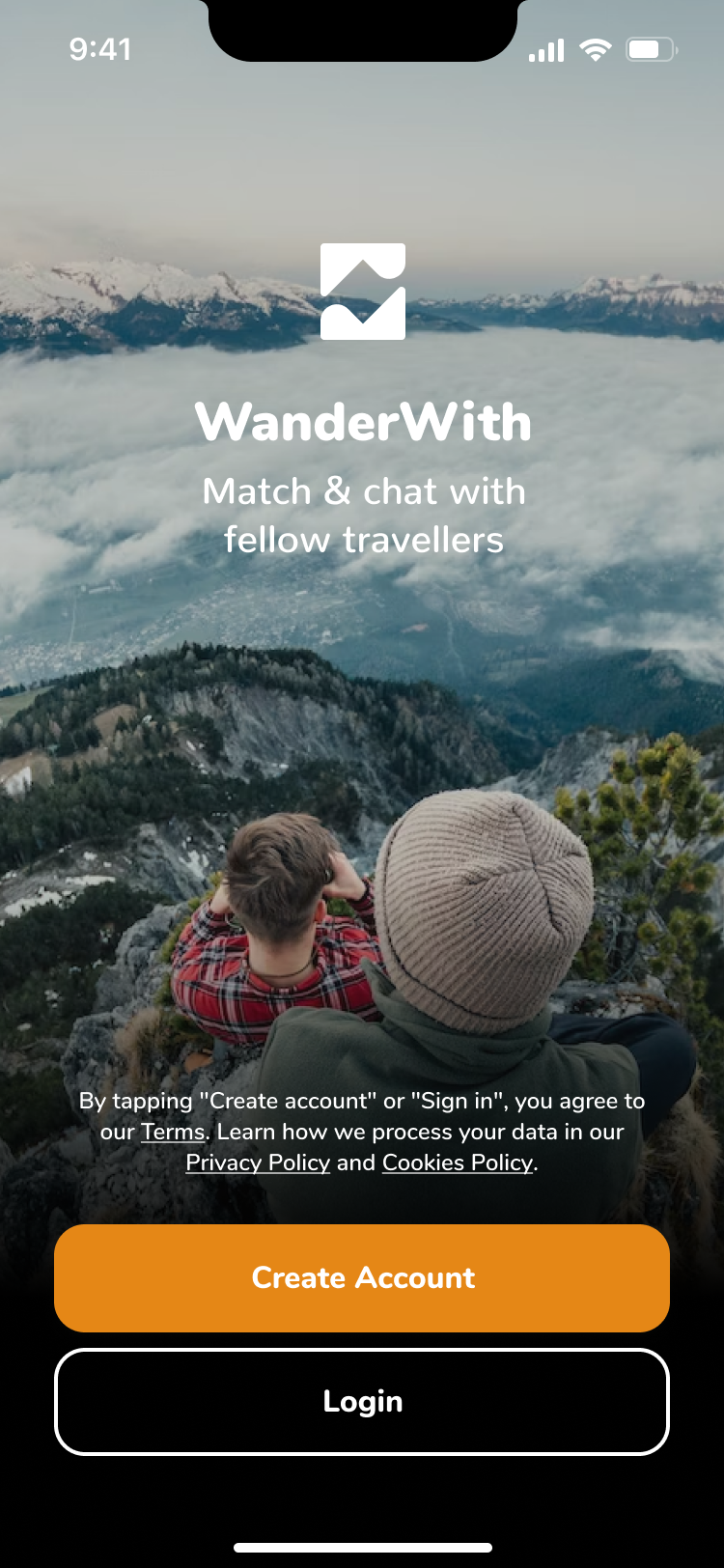
WanderWith is a concept for a social app that matches travellers. You tell it where you're going and when, and it shows you people who'll be in the same place at the same time. The match has a practical starting point: a hike you could take together, or someone to meet when you arrive.
Nobody asked us to make it. It was our own idea, a Never Before Seen Group concept, designed between late April and late June 2023. I wrote the briefs and the settings wireframes, Prakash Ghodke designed the screens. The briefs used familiar matching and messaging patterns, then concentrated on what travel changed: people's locations are temporary, and the useful connection is with someone who will be there when you are.
A match starts with where you'll both be
Prakash's first screens had a Discover tab, a Feed and Messages. "Super early exploration", he called them. My notes back asked the card to explain who someone is and where they will be. "You will both be in Edinburgh next week" was my example. The Feed went too.
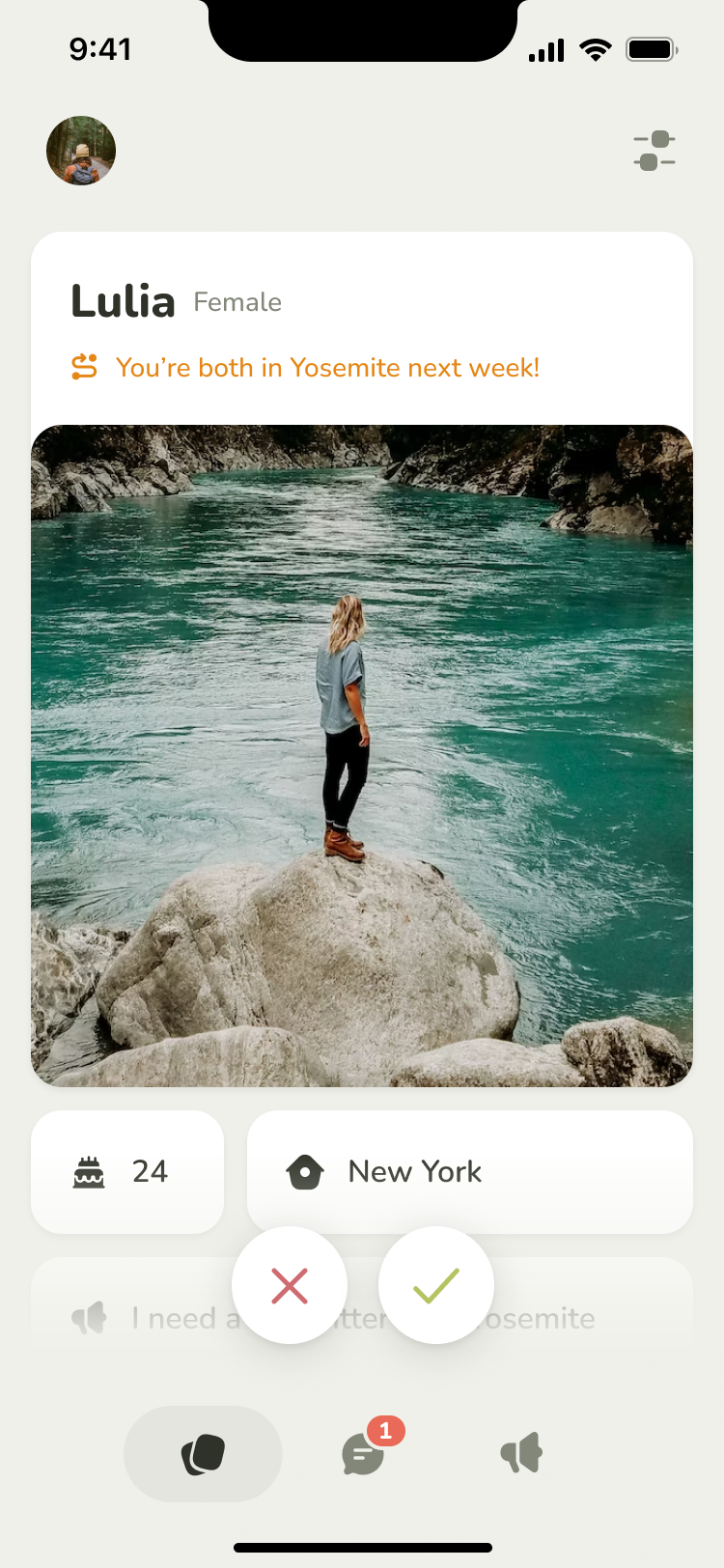
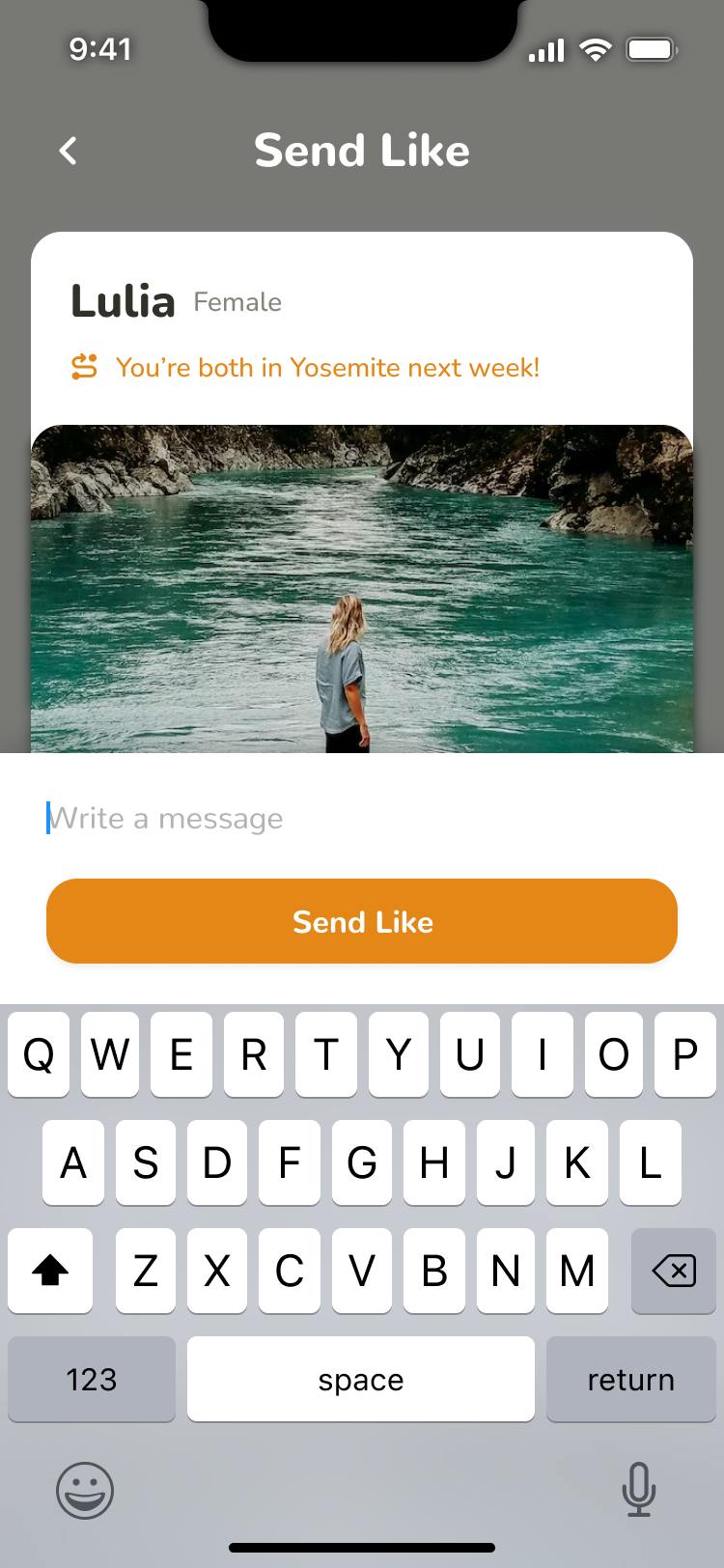
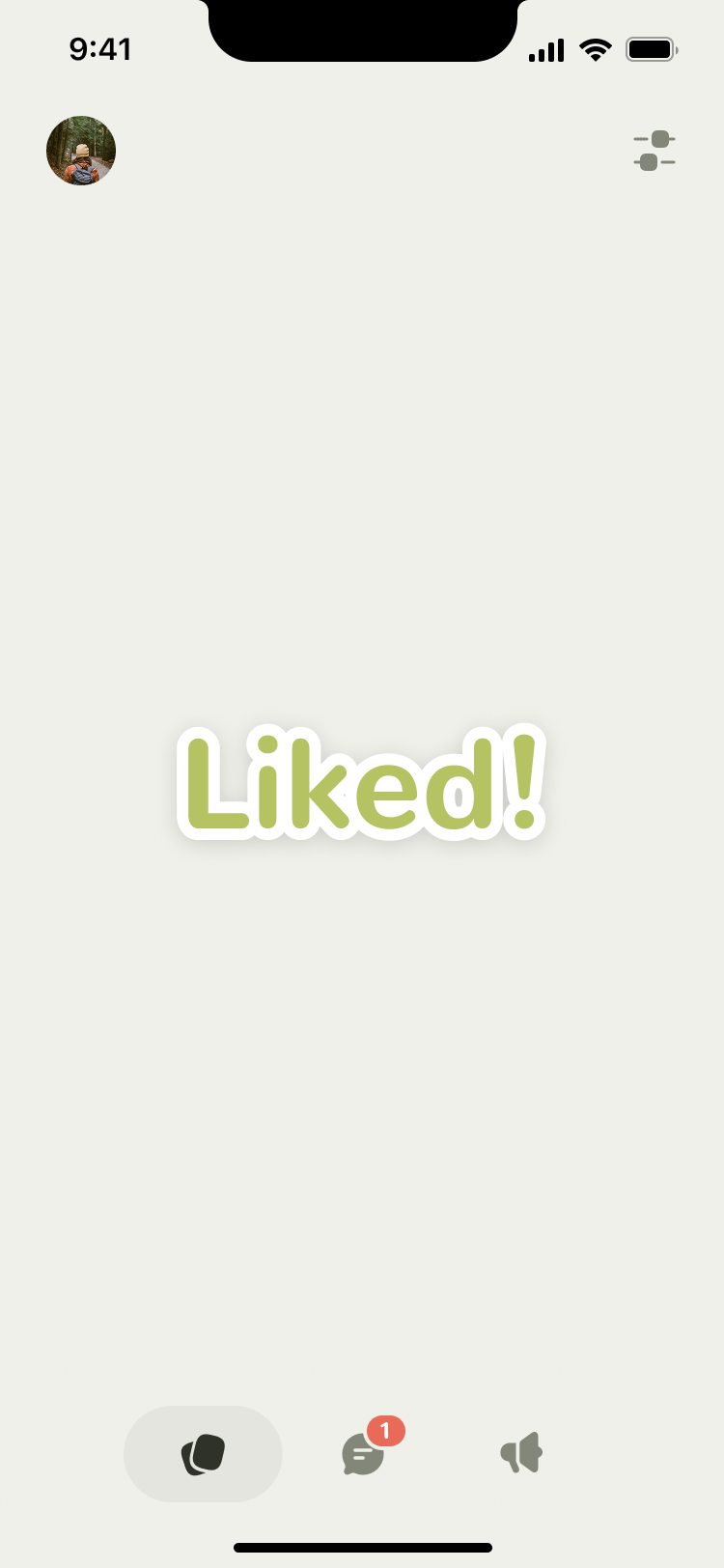
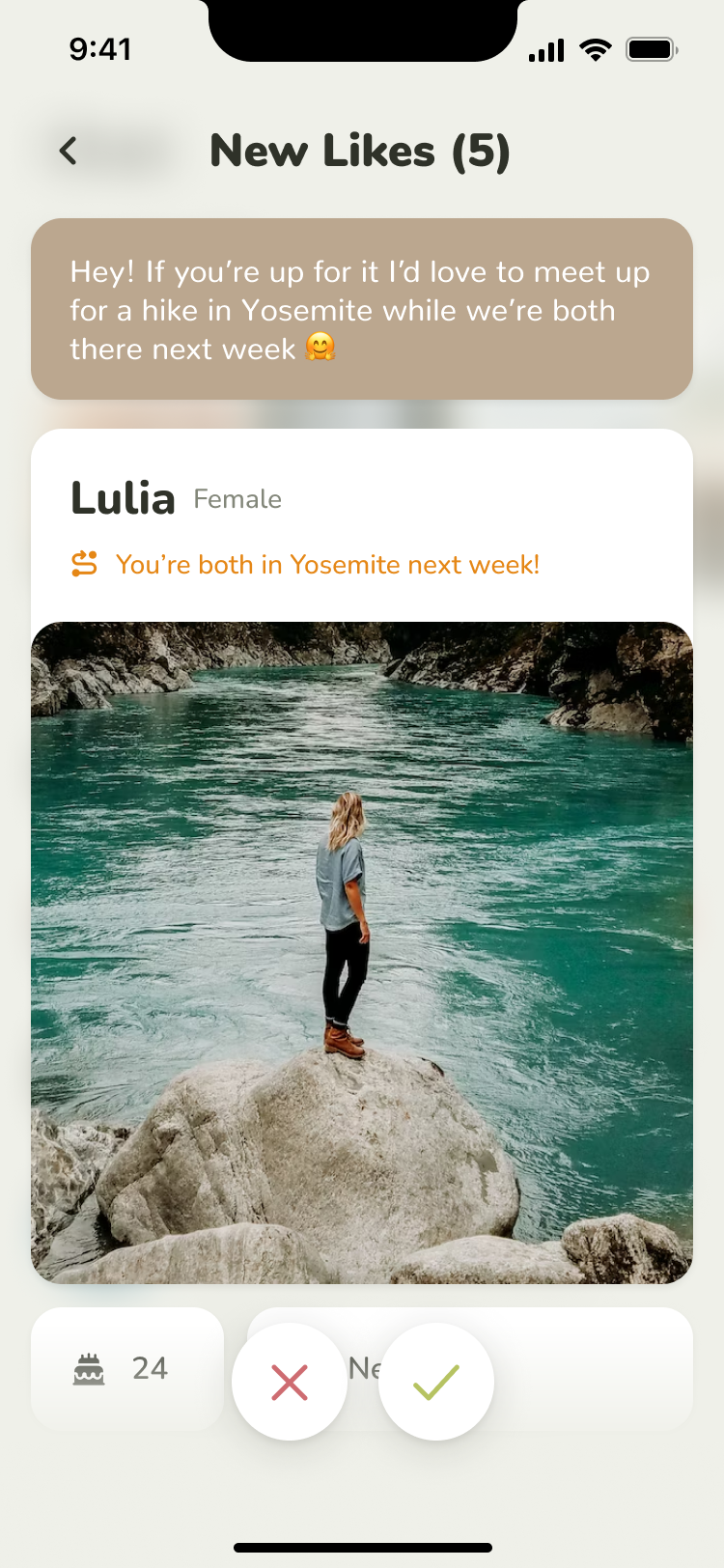
Every card leads with the overlap, in orange under the name: "You're both in Yosemite next week!" That line connects the profile to a possible plan. A like can carry a message, so the first interaction can already be about what to do there.
Later the cards moved to a longer, scrollable profile, giving people more to consider before deciding. And you decide on one person before you see the next: a mockup with Fabio's card peeking out behind the current one had to go.
Every chat is tagged with the place you share
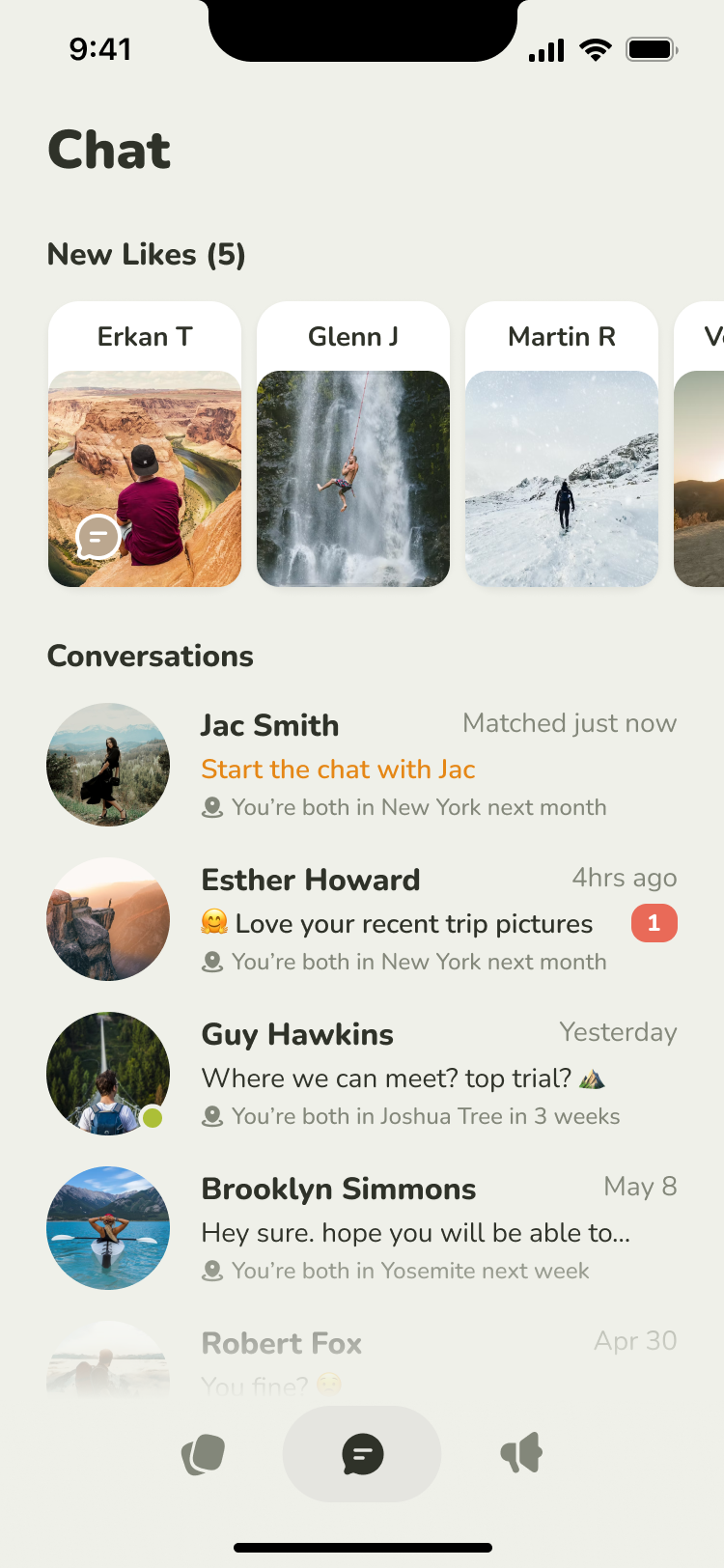
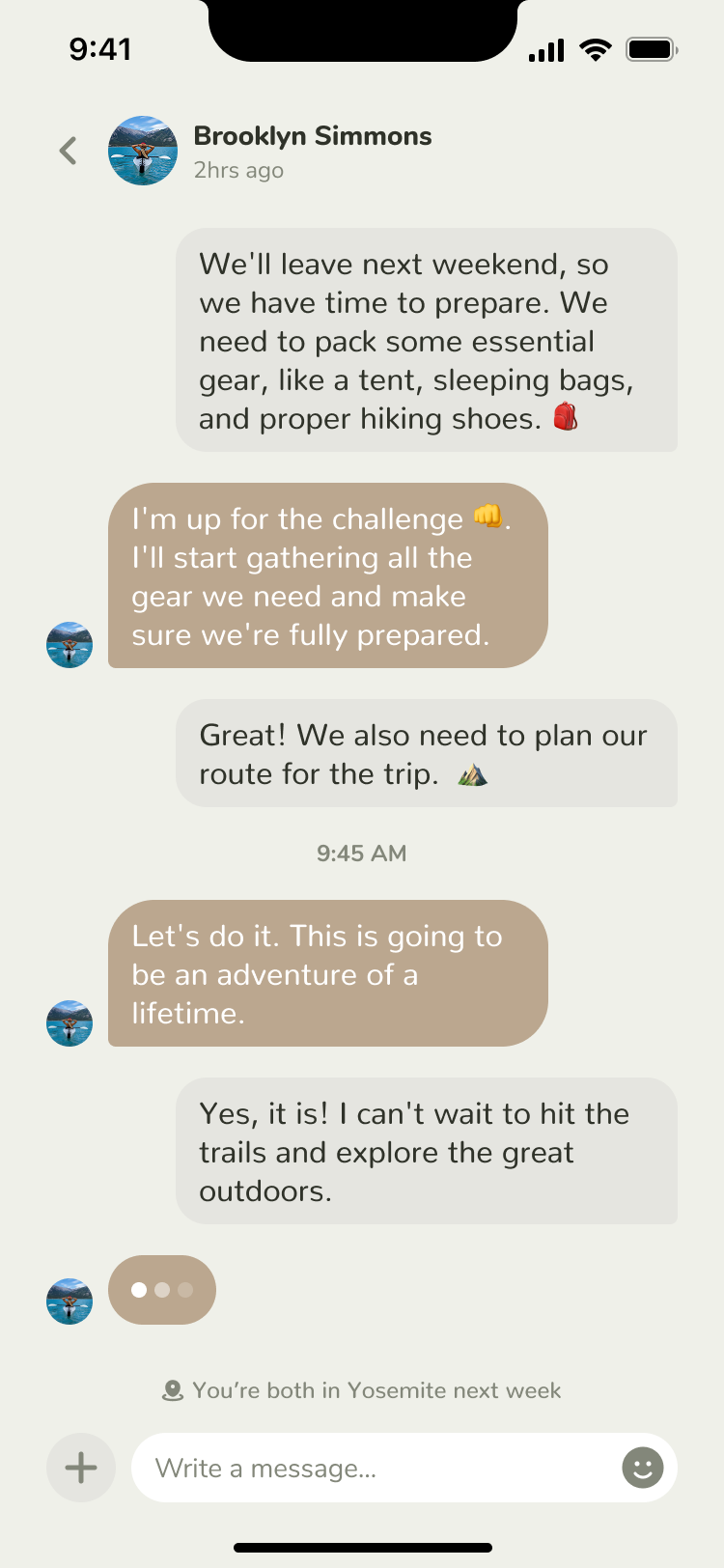
A match may sit in a conversation list alongside people connected to completely different trips. We kept the overlap in view: each conversation carries a tag like "You're both in Joshua Tree in 3 weeks", and the same line sits above the message box in an open chat. You can return to a conversation and see the place and timing that brought you together.
Your trips are part of signing up
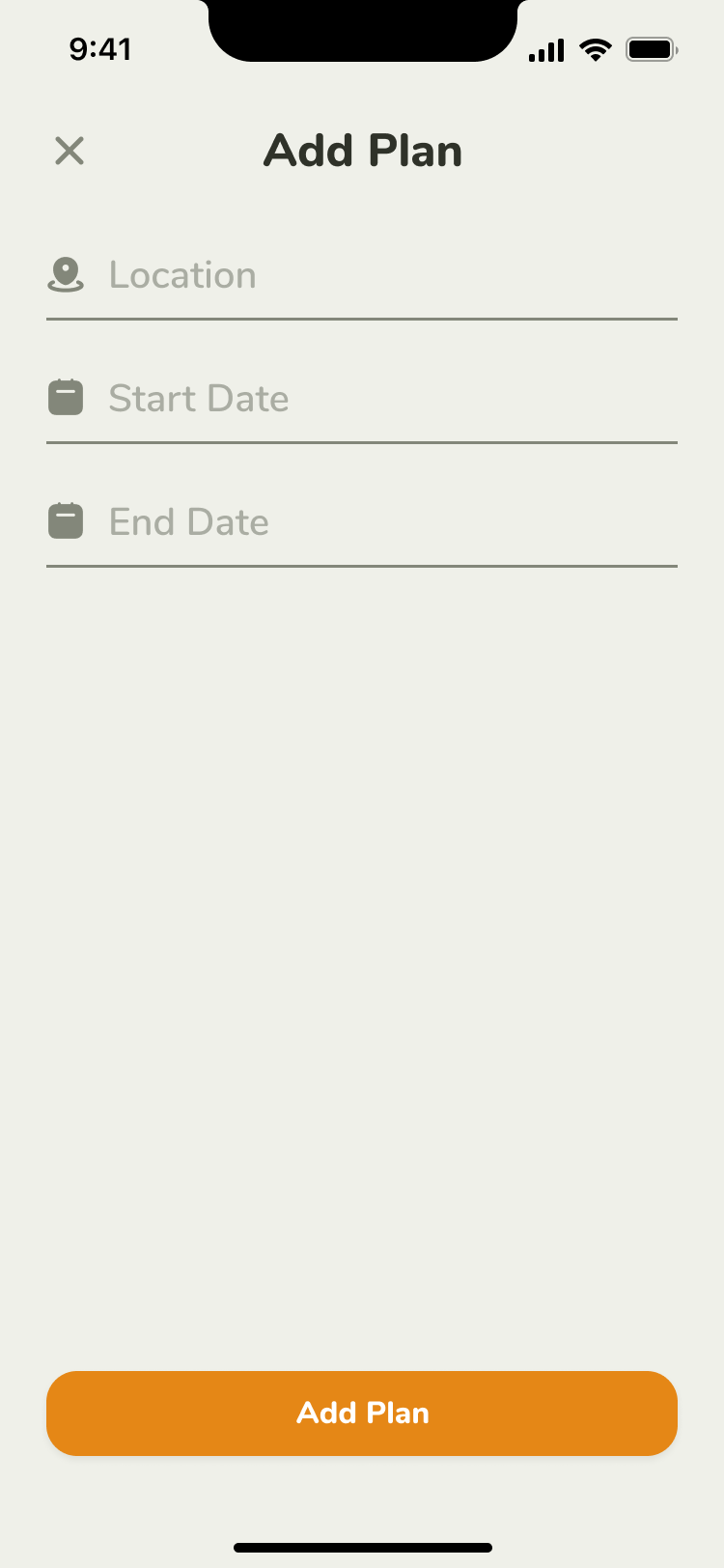
Travel plans belong in setup because matching depends on them. A home town tells us where someone comes from. A destination with start and end dates tells us whether two people could meet.
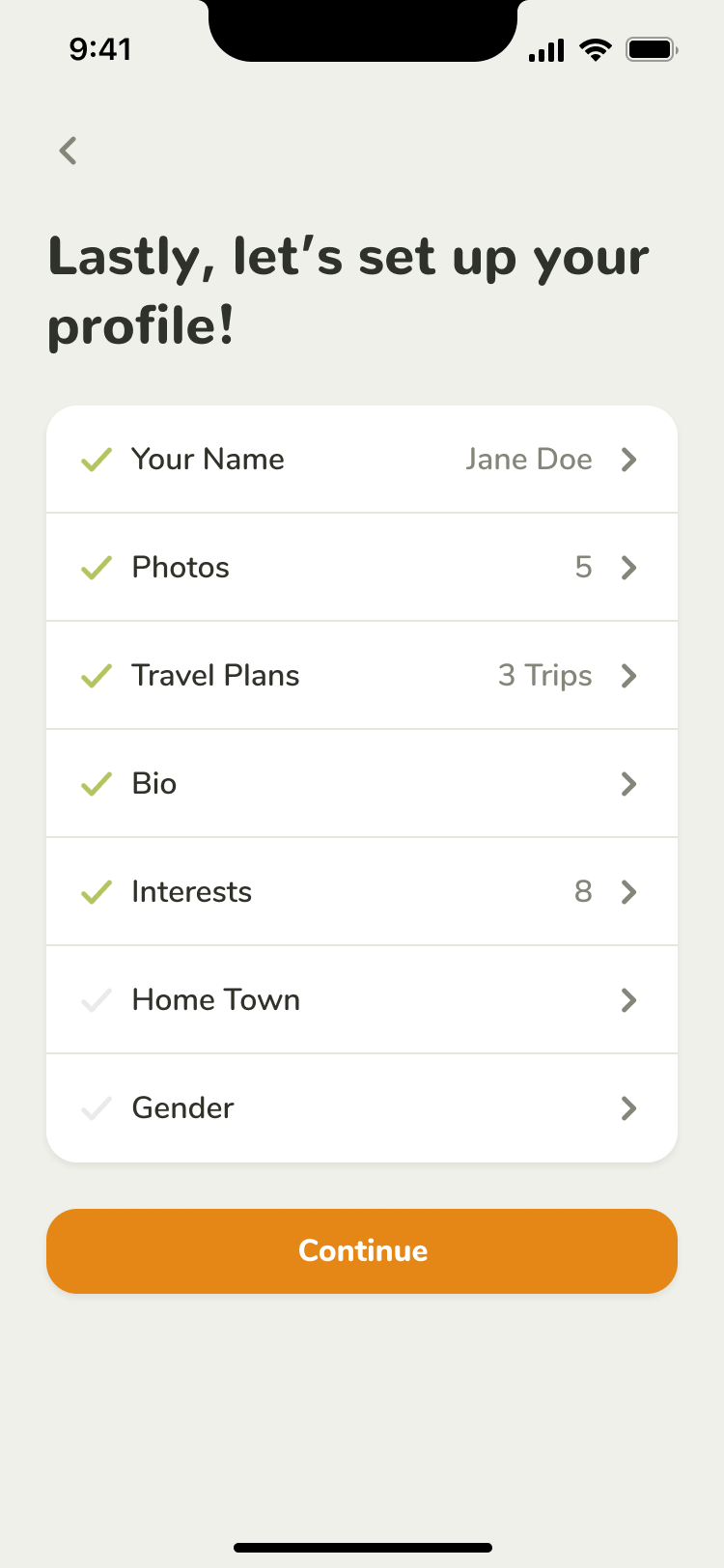
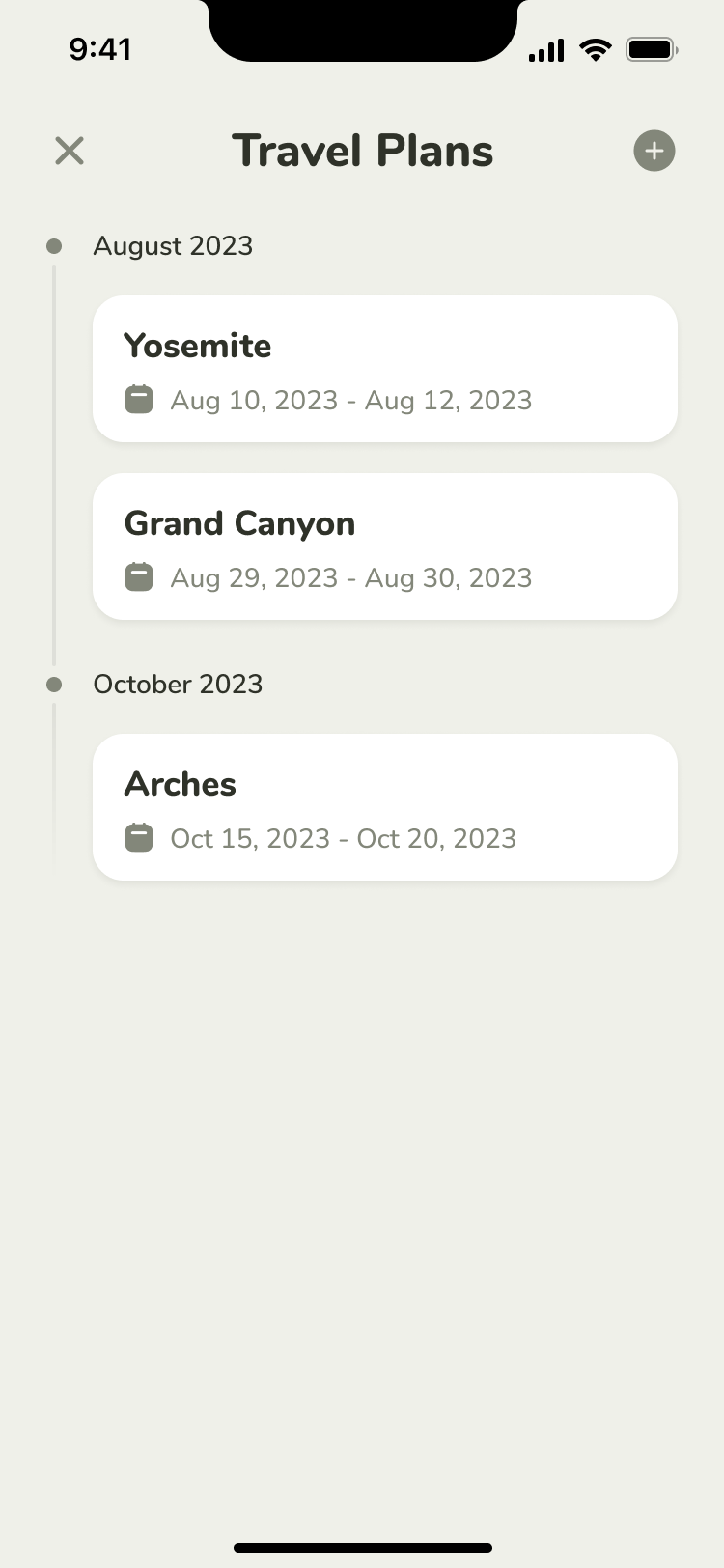
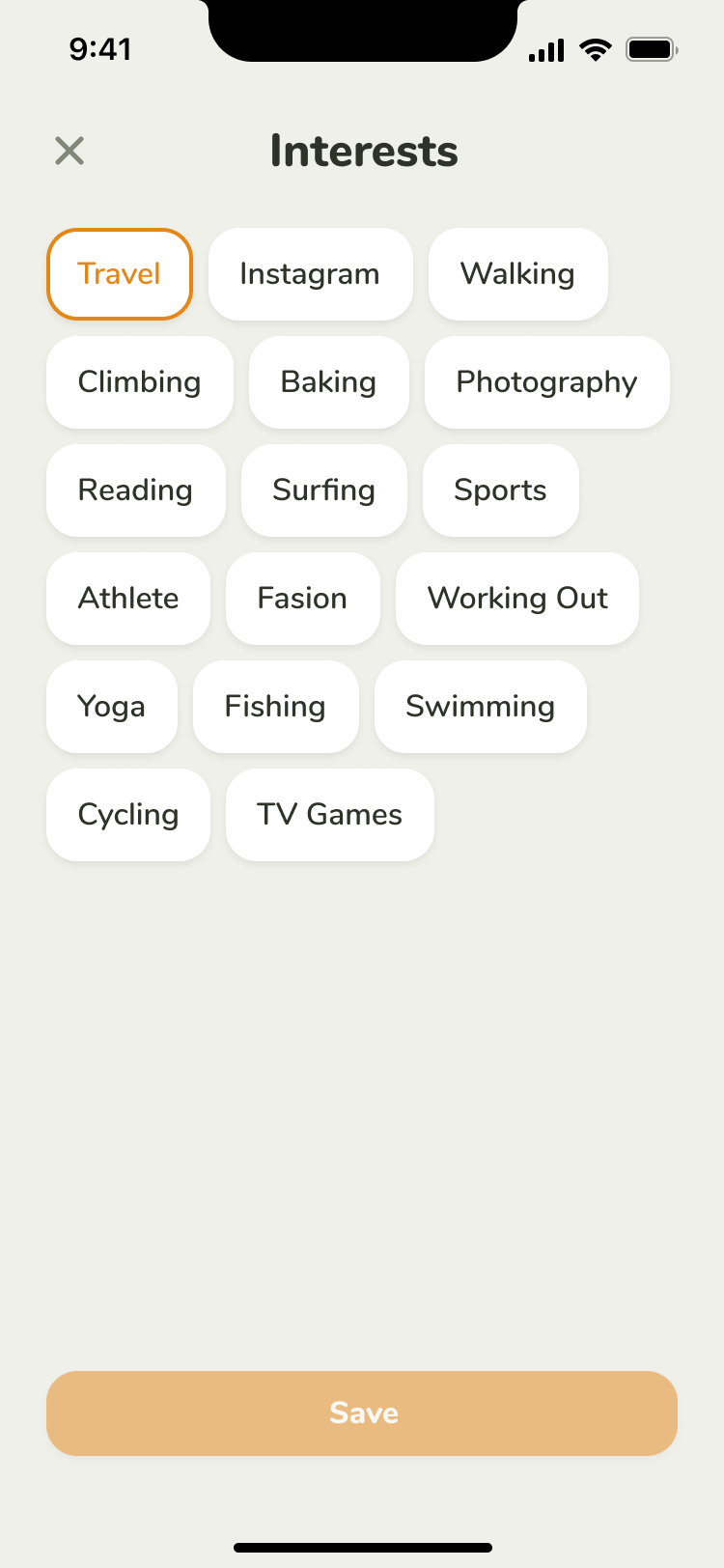
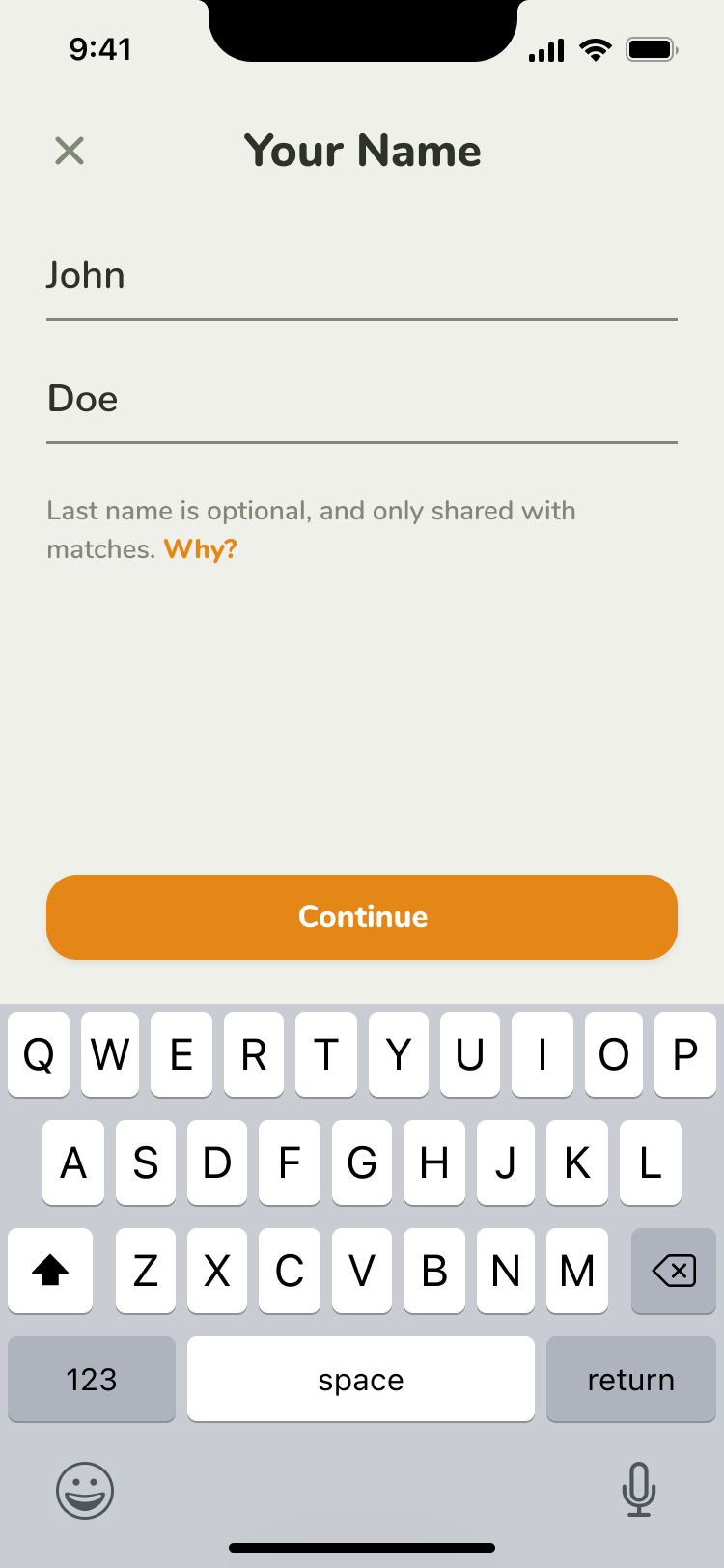
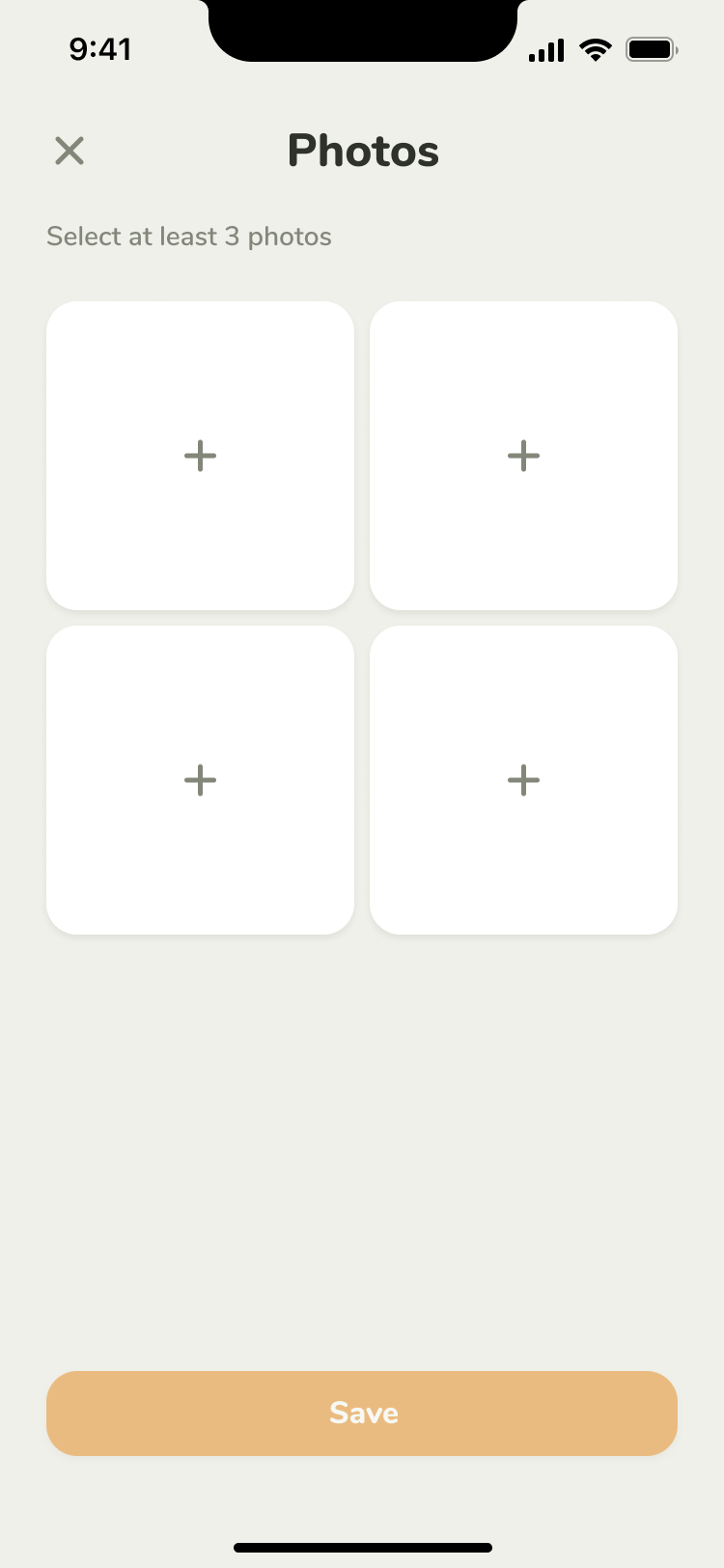
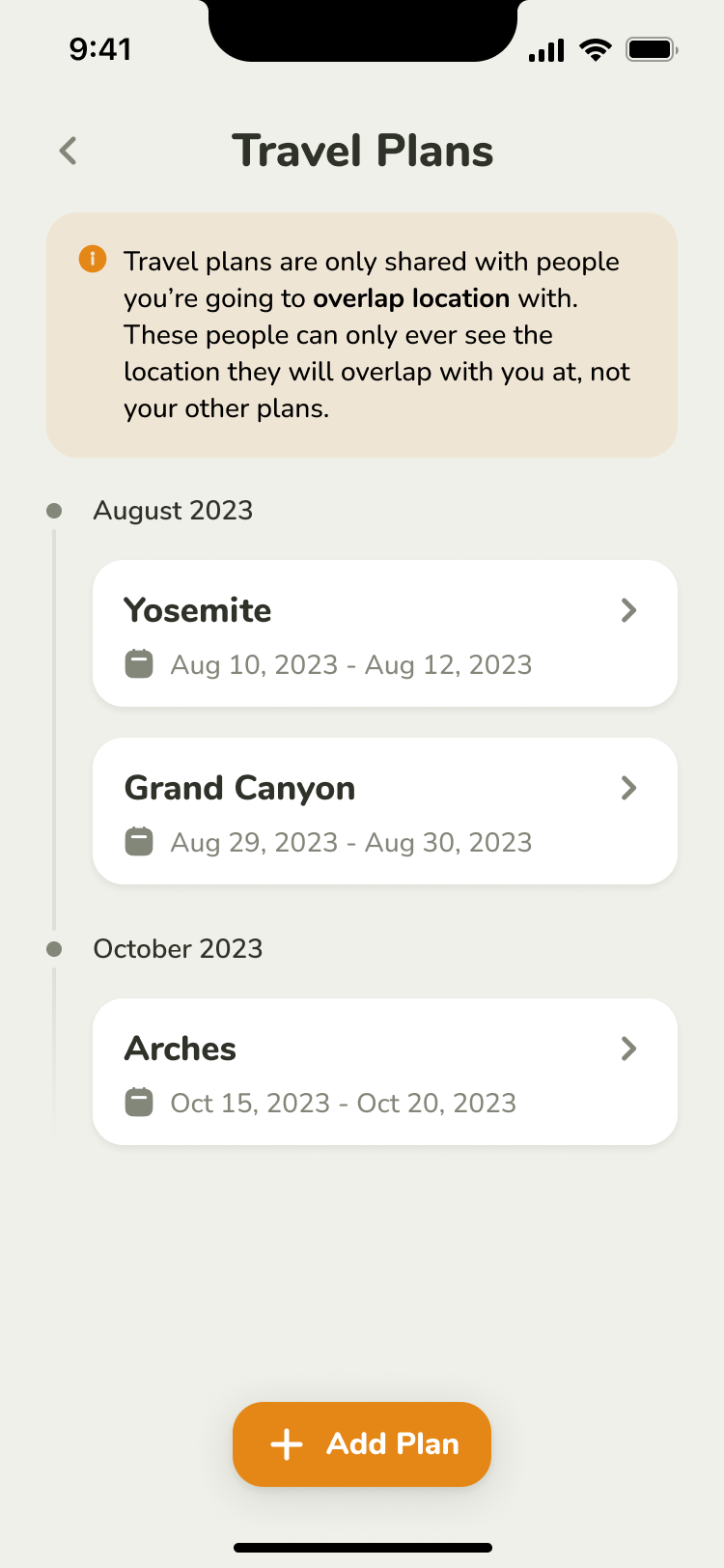
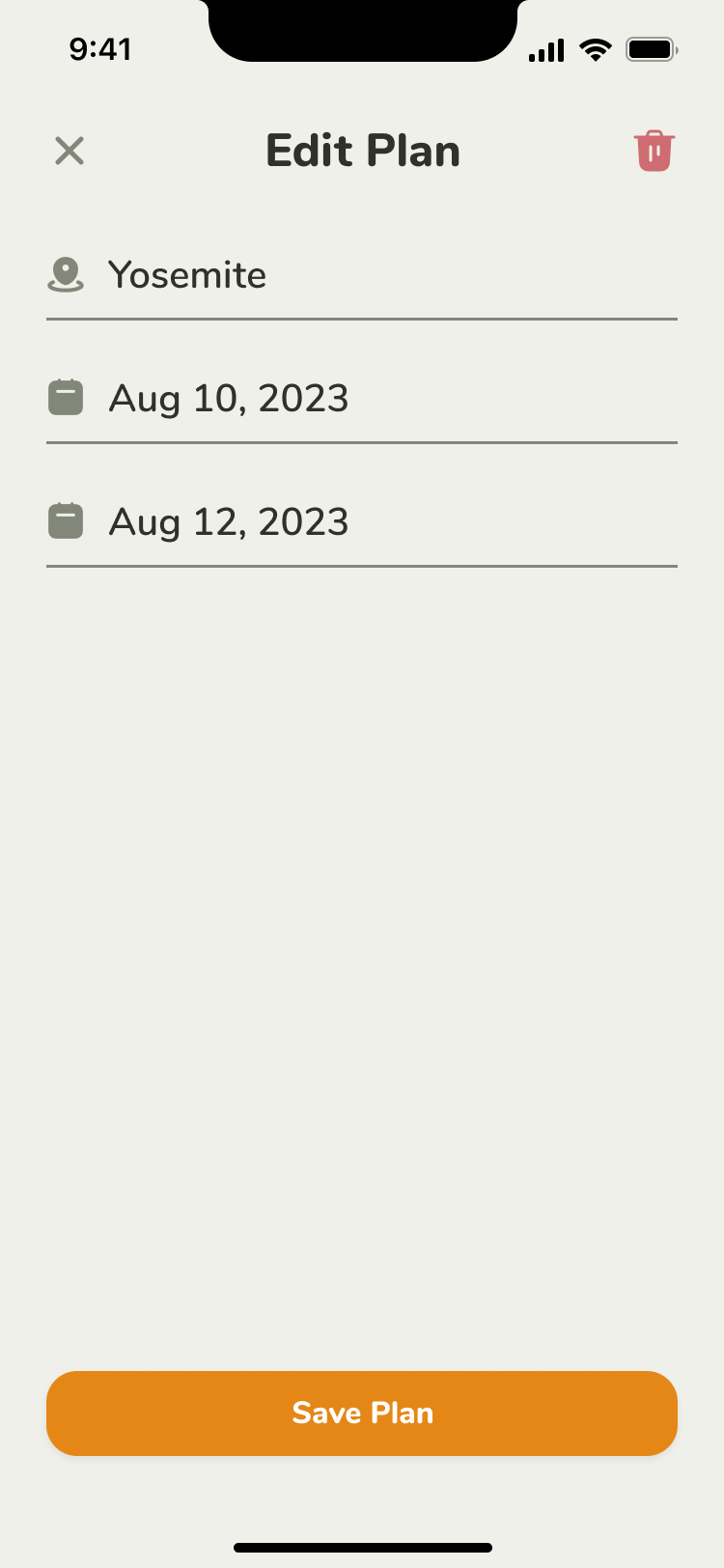
The profile is a checklist, with each item ticked off as you fill it in. Travel plans sit alongside photos and interests, and open into a list organised by month. The person can see the information they have supplied and return to an item to change it. Their last name is optional and only shown to people they have matched with.
Your plans are only shown where they overlap
matching needs a destination and dates, without exposing the whole itinerary
The settings wireframes were mine. The rule at the top of the travel plans screen is the one that matters: plans are only shared with people you'll overlap with, and they only ever see the place you overlap at. Someone you match with for Yosemite in August doesn't learn you're in Arches in October.
Callouts ask a whole place for help
Callouts arrived after the matching was drawn. A callout asks the travellers in a place for help or advice. The brief's examples included a dog-sitter near Yosemite and help fixing a van's water system.
Those requests need a wider audience than an individual match. Callouts go out as notifications to people in the area, with a third tab beside Discover and Chat. Categories like Buddy-ups, Parking and Pets let people narrow the requests they see. I added more notes on the feature, and in the end every callout had a location, set by the poster and shown on the card.
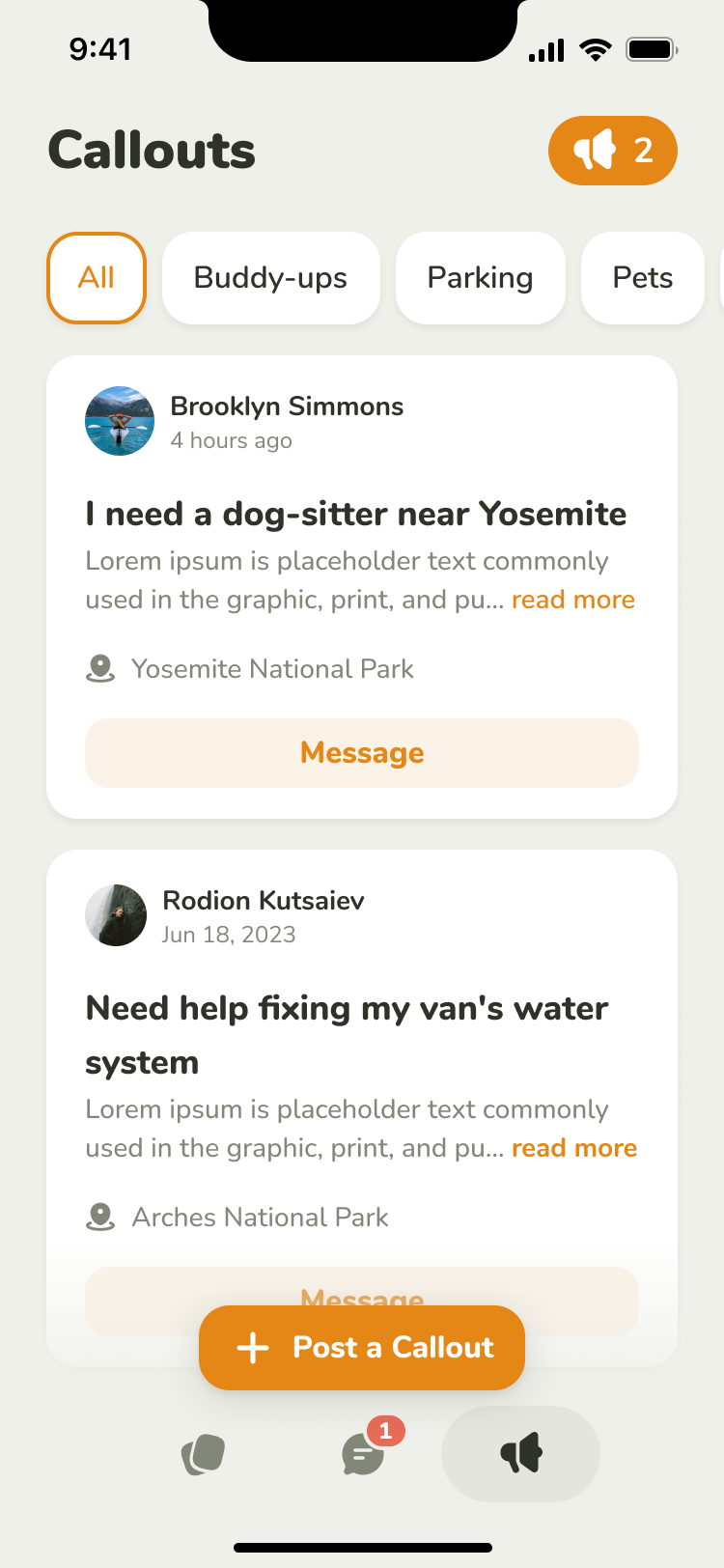
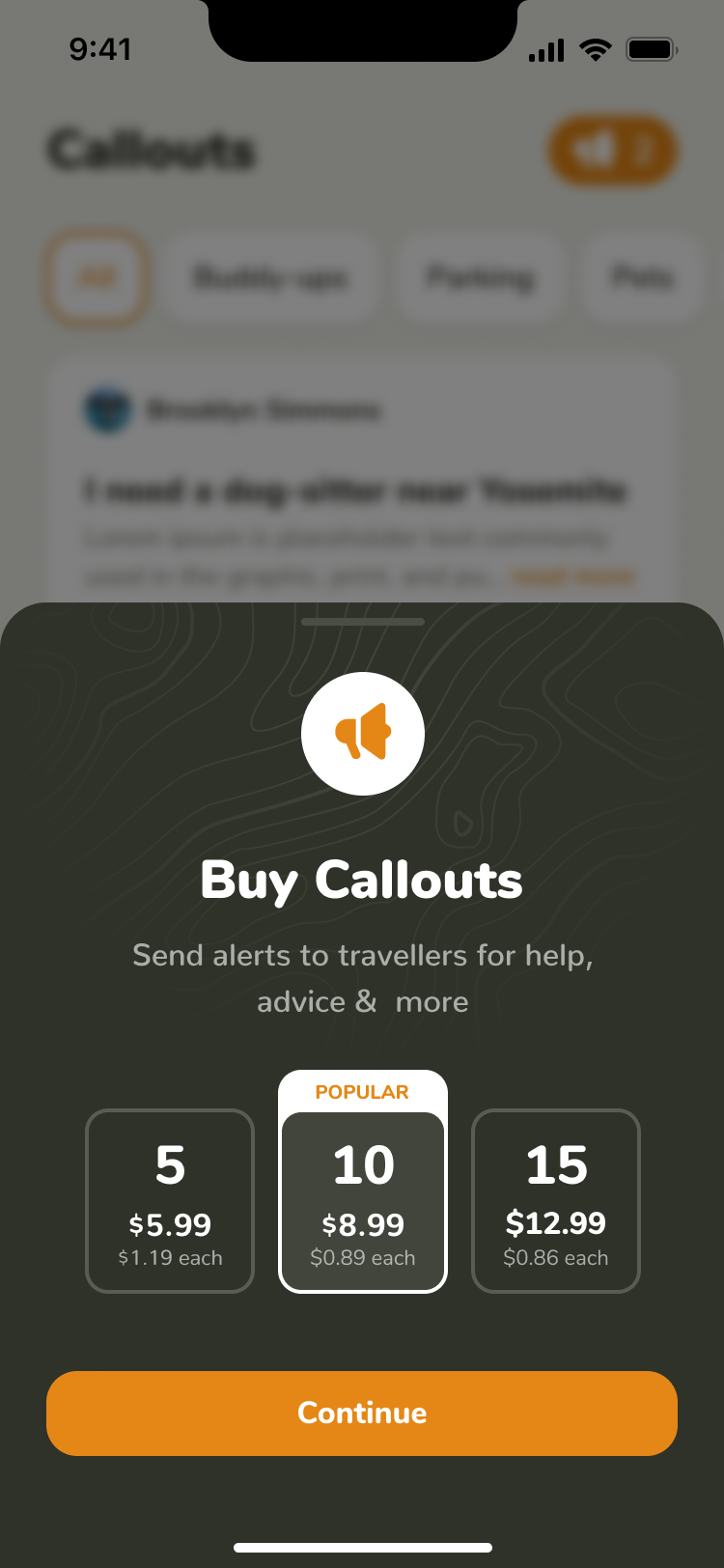
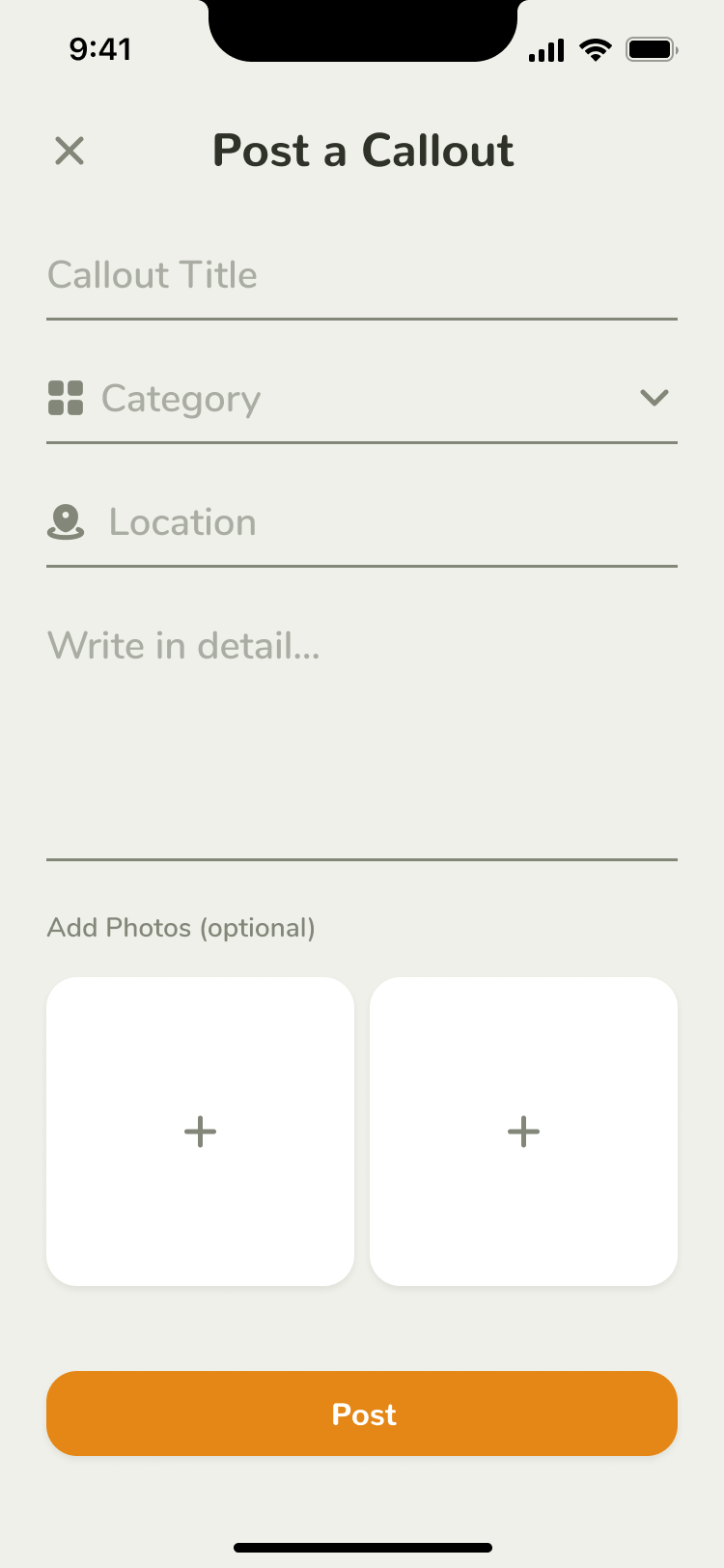
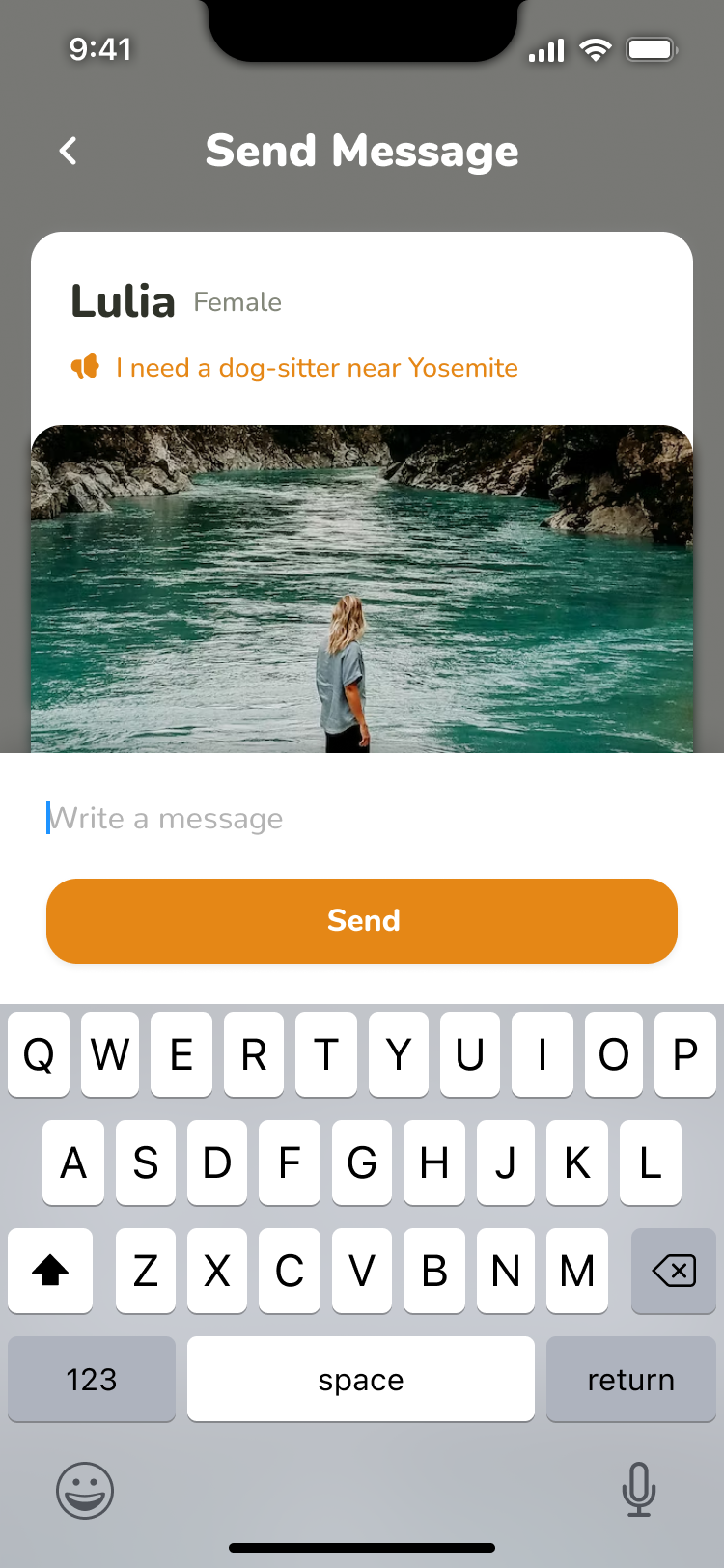
The tab shows your balance in its corner, with packs of 5, 10 and 15 to top it up. The last call was Prakash's: the description sits on the callout card, cut short with a "read more", and stays off the reply screen. A callout also sits on the poster's match card. While browsing people heading to Yosemite, you can see that one of them needs a dog-sitter and reply about that specific request.
a request can reach the area before the poster has made a match
Orange is for the next step
The identity carries through the flows with a square mark and five colours: dark olive, orange, tan, off-white and lime. Orange is the action (Continue, Save, Send Like, Post a Callout), tan is the other person's messages, and lime is "Liked!".

WanderWith became part of Travelpad
We did not launch WanderWith as a standalone app. It was one of two travel concepts we designed for ourselves in 2023. The other was PLOT, a social app about places. An AI trip planner we'd been thinking about was folded into WanderWith as a feature. That September I sent the team a Loom of our concepts and asked which was worth launching. In July 2024 I published a landing page for Travelpad, an AI-driven tool for discovering and planning travel, which grew out of both.
More from WanderWith